Running injuries: the 5 most common and how to recover
Most runners pick up a niggle at some point. The good news is that most running injuries settle well with a clear explanation, sensible changes to training and a gradual plan to rebuild strength.
We are osteopaths who have been looking after the Victoria Park community for 15 years, and we see runners in clinic every week. In this guide we share what the research tells us about the most common running injuries, and how we help people get back to the running they enjoy.
What is an osteopath?
Osteopaths are healthcare professionals who treat problems with muscles, joints and nerves. Like doctors and physiotherapists, we are regulated by law in the UK.
Our approach looks at the whole runner, not just the sore spot. A painful knee can be influenced by how your foot, hip and back share the load, as well as by your training, sleep and stress. We combine hands-on treatment with exercise and clear advice, guided by current research.
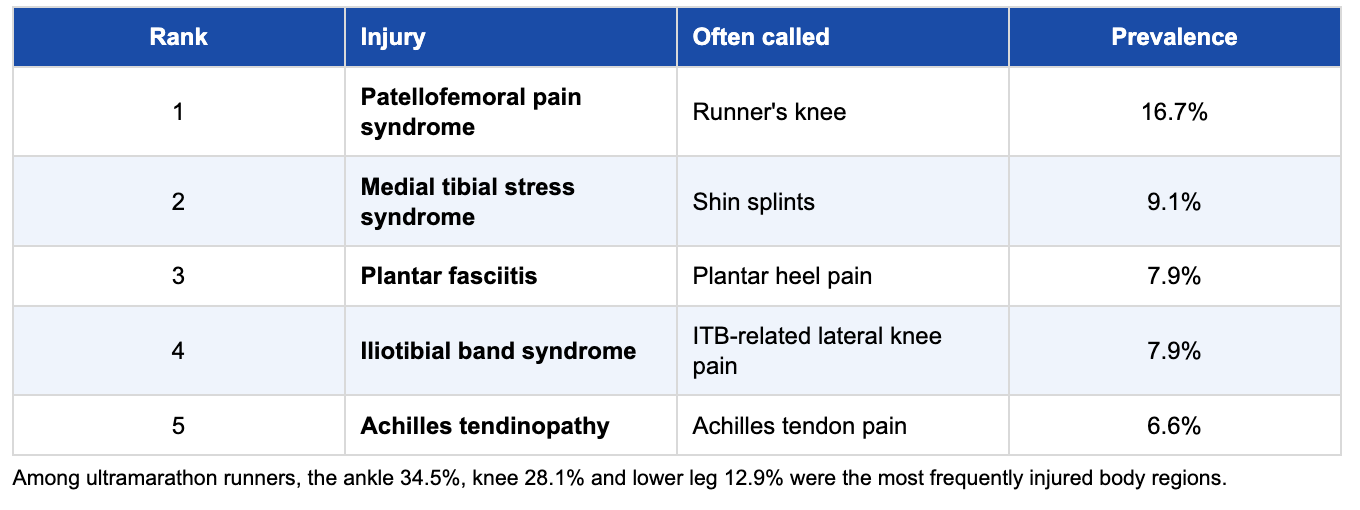
The five most common running injuries
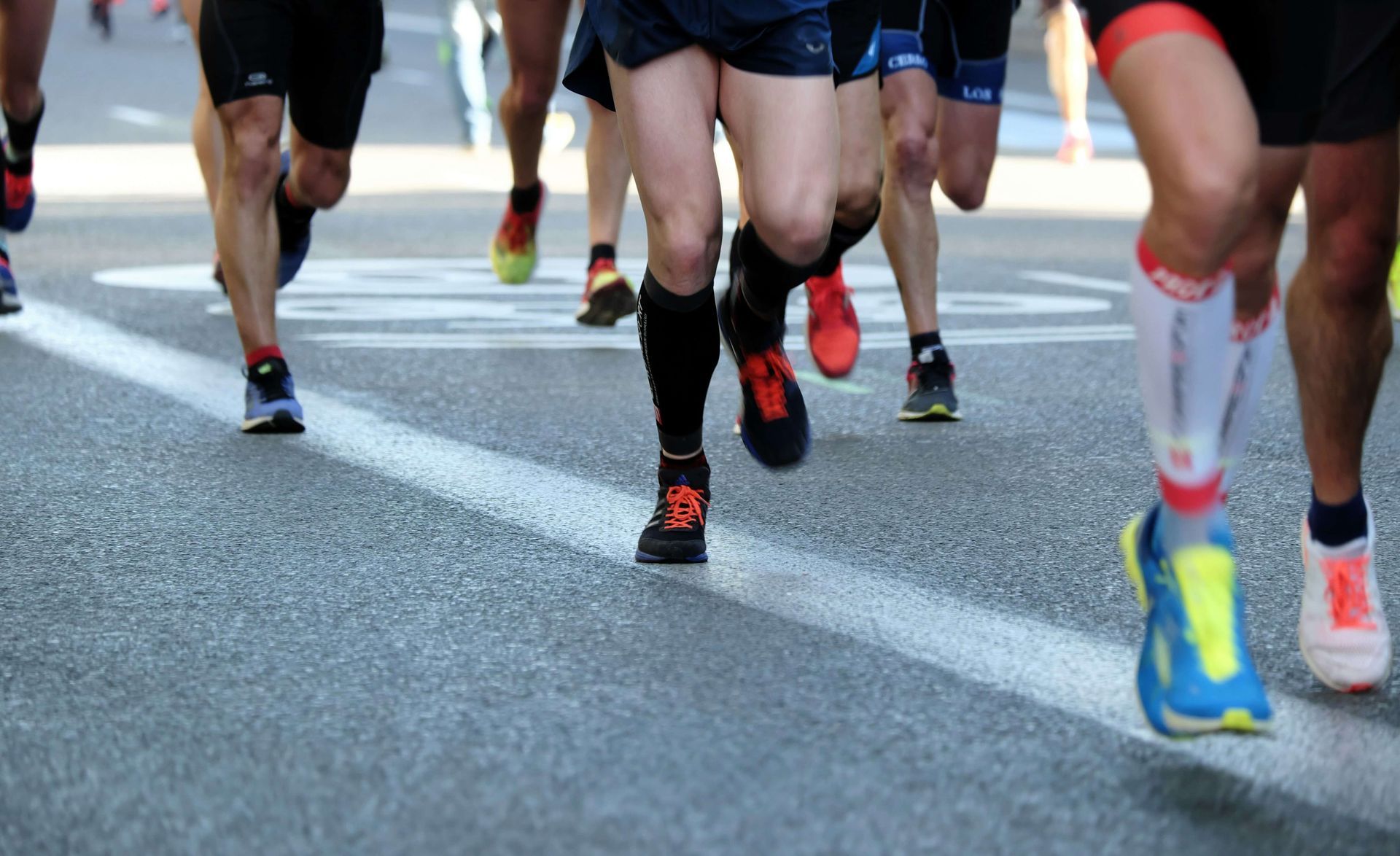
Across the studies reviewed, the average prevalence of running-related injury was 44.6%, so if you are carrying a niggle, you are in very good company. The knee, lower leg and foot accounted for the most injuries.
How we assess running pain
Your first appointment is a conversation as much as an examination. We look at the painful area and at everything that might be feeding into it.
- Listen. We hear your story: how the pain started, your training, previous injuries, general health and what you want to get back to. We also check for anything that needs medical investigation.
- Examine. We look at how you move as a whole, checking the painful area alongside the joints, muscles, strength and balance above and below it.
- Test. We use a cluster of clinical tests, rather than relying on any single test, to reach a clear working diagnosis, and we explain it in plain English.
- Plan. Together we agree a plan that combines hands-on treatment with graded rehabilitation, built around your goals, training and recovery.
What treatment may include
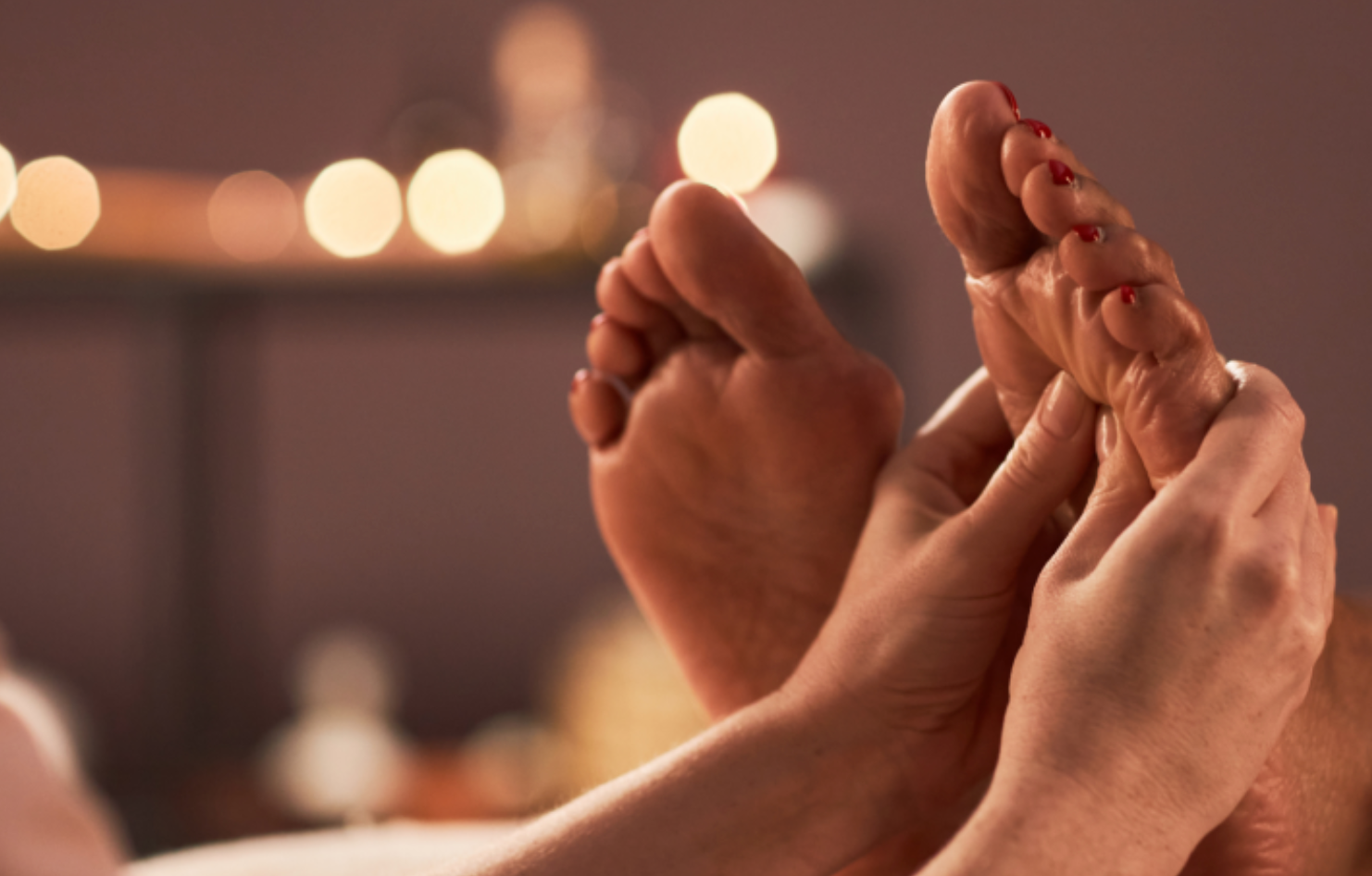
Hands-on treatment, such as soft tissue work, joint mobilisation and gentle manipulation, can help ease pain and get you moving more comfortably. The research is clearest that it works best alongside education and progressive exercise, so we always pair the two.
Depending on your injury, your plan may also include taping, footwear or orthotic advice, changes to running technique, adjustments to your training load and a step-by-step return to running.
Building resilience for running
- Shoes that suit you. Choose a pair that fits the length and width of your feet, feels comfortable and suits the running you do. No single type of shoe prevents injury for everyone, so comfort is a good guide.
- Build gradually. Avoid sudden jumps in the length of any single run. Increase distance, speed, hills and frequency a little at a time, with easier days between harder sessions.
- Get stronger. Strength work tailored to you can improve how well your body copes with running, although no programme removes injury risk completely. Useful examples include bridges, deadlifts, side planks and Pallof presses.
- Keep the whole chain moving. Calf and ankle mobility, strengthening the muscles that support your arches and ankles, hip and trunk control, and simple running drills all help share the load along your legs and spine.
Example plan for runner's knee
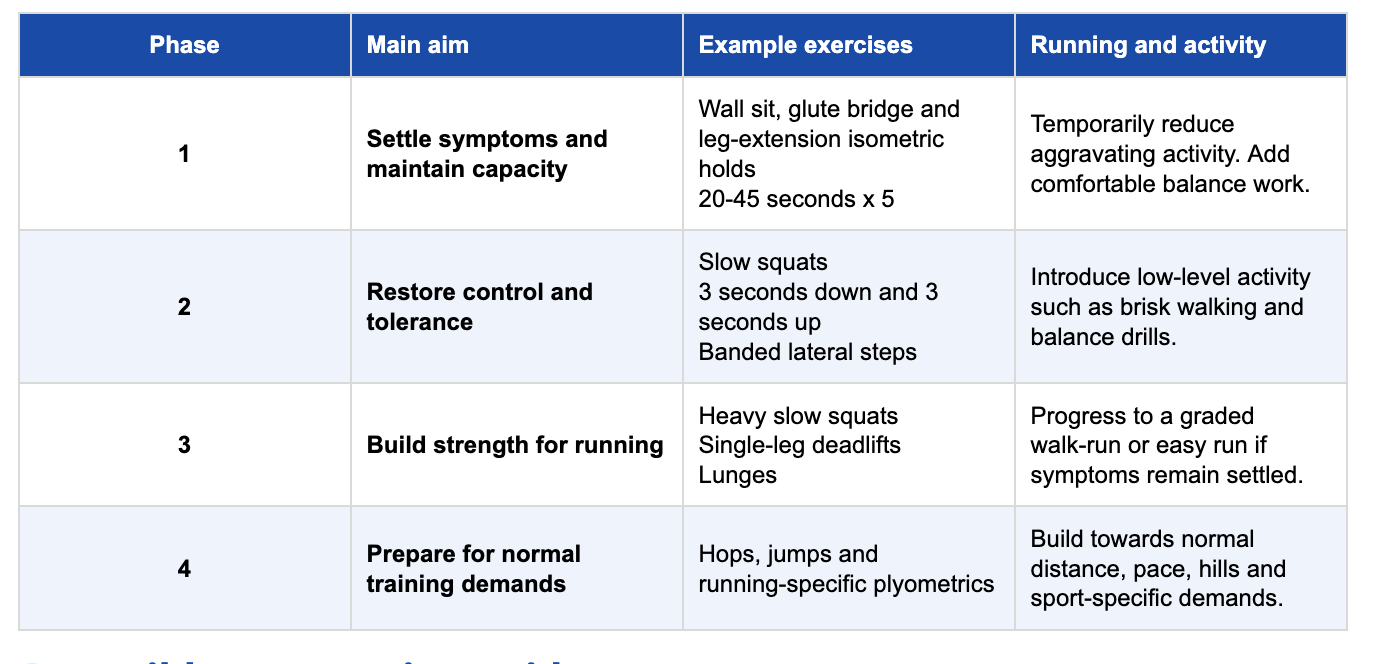
Patellofemoral pain syndrome is one of the most common reasons runners come to see us. It usually causes an ache around or behind the kneecap, often made worse by running, stairs, hills, squatting or sitting for long periods. Below is an example of how a plan might progress; in clinic we tailor the exercises and the pace to you. Example plan for runner's knee
.