Understanding Reflexology: More Than a Foot Massage
By Uta, Clinical Reflexologist at Victoria Park Osteopaths
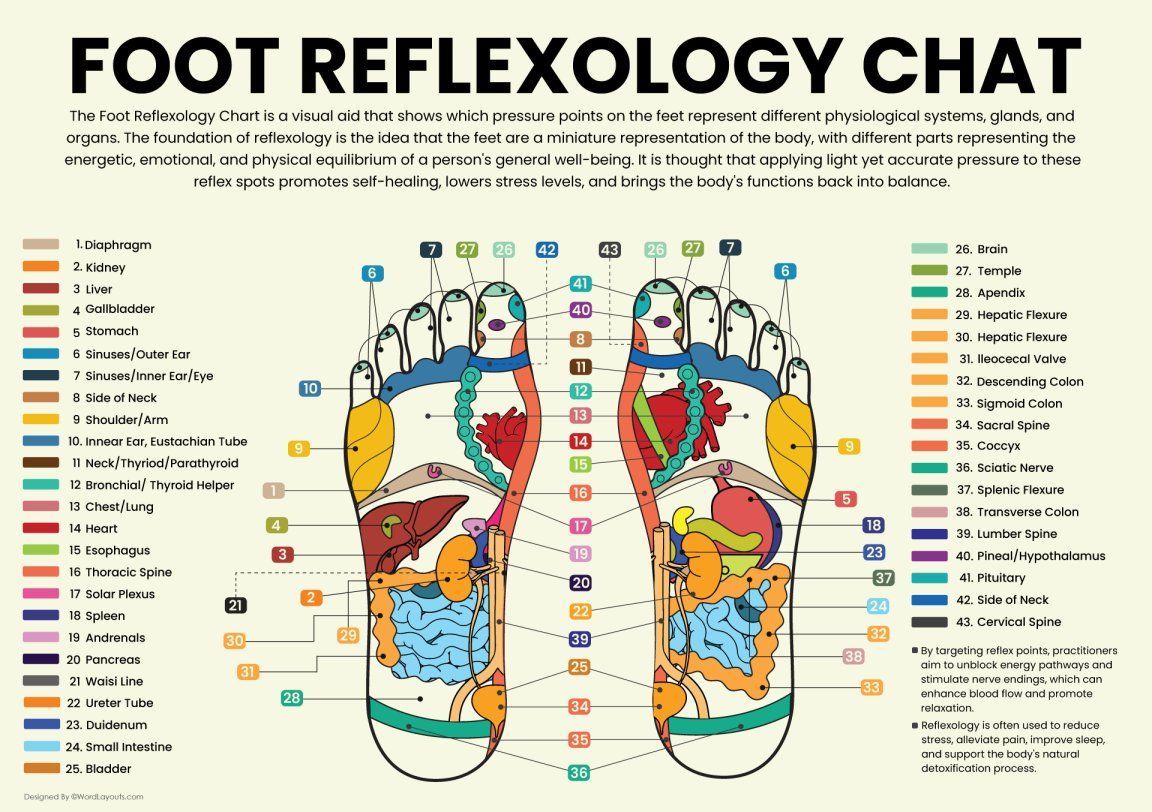
Many of us have a complicated relationship with our feet — how they look, their shape, or how ticklish and sensitive they are to touch. That's completely natural; feet are personal. They're also rather remarkable. Our feet are one of the most sensitive parts of the body, with somewhere in the region of 200,000 nerve endings packed into each square centimetre — a small reminder of just how connected our feet are to the rest of us.
So what is reflexology?
The Association of Reflexologists describes it as a complementary therapy that applies gentle pressure to specific points on the feet (and sometimes the hands or ears) to encourage relaxation, ease tension and support a sense of overall wellbeing. That's a good summary — but there's a little more to how I work.
As a clinical reflexologist, my treatments are built on a solid understanding of the human body. A session involves working through a carefully ordered sequence of pressure points across the foot. My training in anatomy, physiology and pathology — alongside current research — shapes how I approach each treatment, so that every session is considered, gentle and tailored to the person in front of me.
Limbic reflexology
Alongside standard reflexology, I also use an approach known as limbic reflexology, which focuses on reflex points associated with how the body manages stress, emotion and discomfort. Many of the people I see are living with high levels of stress or anxiety, or with long-standing discomfort, and find these calm, focused sessions a supportive part of looking after themselves.
I like to be honest about this: reflexology isn't a cure, and it isn't a substitute for medical care. What it can offer many people is a genuine sense of relaxation, a moment of calm, and dedicated time spent on their own wellbeing.
What to expect from a session
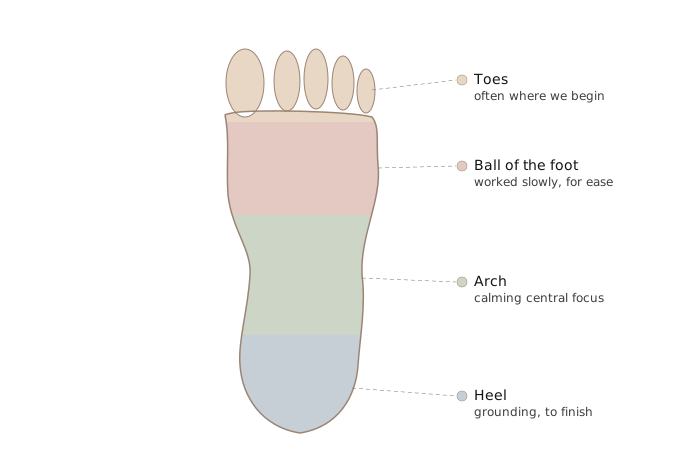
A full session usually lasts between 45 and 60 minutes. Part of the time is focused on specific reflex points on the pad of the big toe, with the rest of the session working across the whole foot to encourage relaxation and a sense of balance throughout the body.
When you book, I'll ask for a brief note on what's brought you in. That helps me put together a preliminary plan, which usually includes work across most pressure points and a gentle assessment of the whole foot.
The treatment itself is gentle, non-invasive and shouldn't be painful. Occasionally — particularly with longer-standing issues — you might notice mild tenderness at certain points, a feeling of warmth, or a light tingling sensation. If that happens, I simply adjust the pressure so you stay comfortable throughout.
To get the most from reflexology, I usually suggest a block of four sessions, as this gives any benefits time to build gradually.
After your session
Within 24 hours of your appointment, I'll send a short follow-up email to ask how you've felt and whether you've noticed anything since. Your feedback — both during the session and afterwards — helps me refine your ongoing plan so it stays right for you.
Interested?
If you'd like to find out more about reflexology and whether it might suit you, get in touch with Victoria Park Osteopaths to arrange a session with me. I'd be glad to talk it through before booking.
Why foot pain spikes in autumn
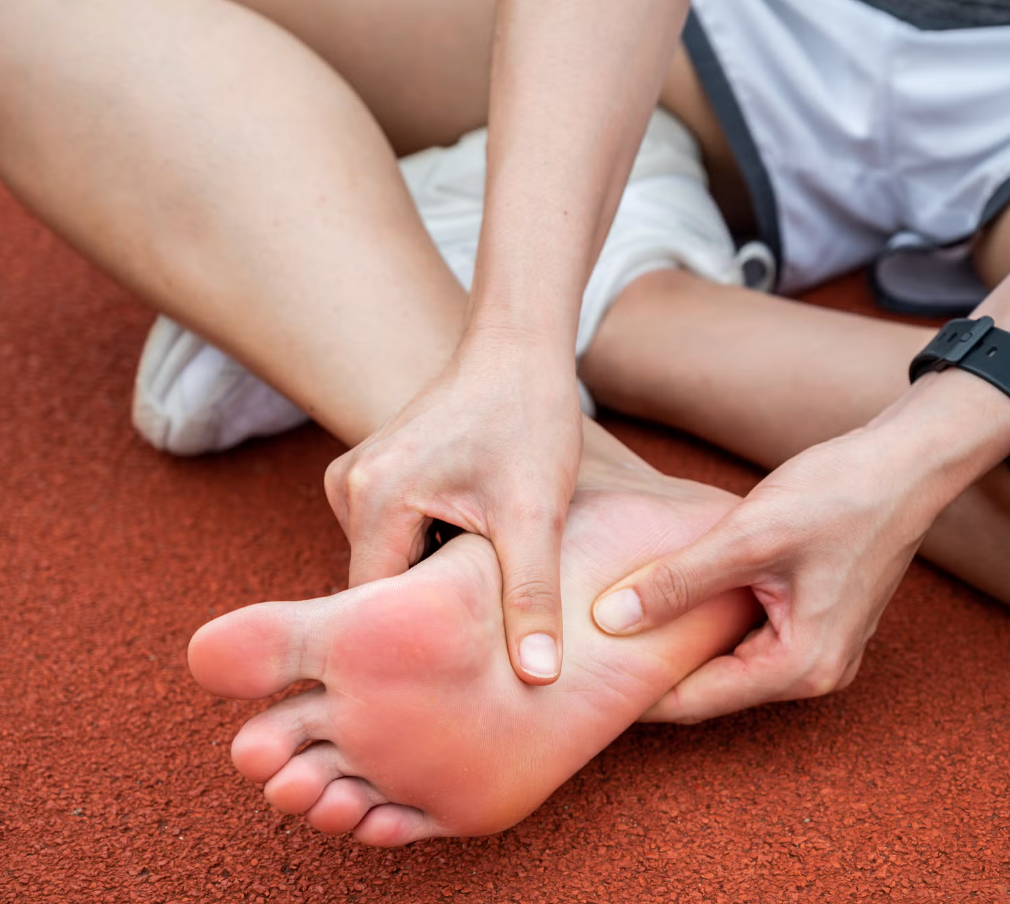
Every autumn at VPO we see a sharp rise in foot pain, and the timing is no coincidence. After months in sandals, flip flops and Birkenstocks, we switch almost overnight to boots, trainers and work shoes. Add wetter ground, darker evenings and a return to routines after summer, and our feet are suddenly asked to work in a very different way.
Each foot contains 26 bones, 33 joints, around 30 muscles and tendons that act on it, and over 100 ligaments. With that many moving parts, a small change in what you wear or how you walk can shift load onto tissues that aren't used to it. This blog explains how the foot works, what happens to it with every step, and the most common places we see pain, so you can make sense of what your feet might be telling you.

How the foot is built
The foot is best thought of as three sections that work as a team: the rearfoot, the midfoot and the forefoot.
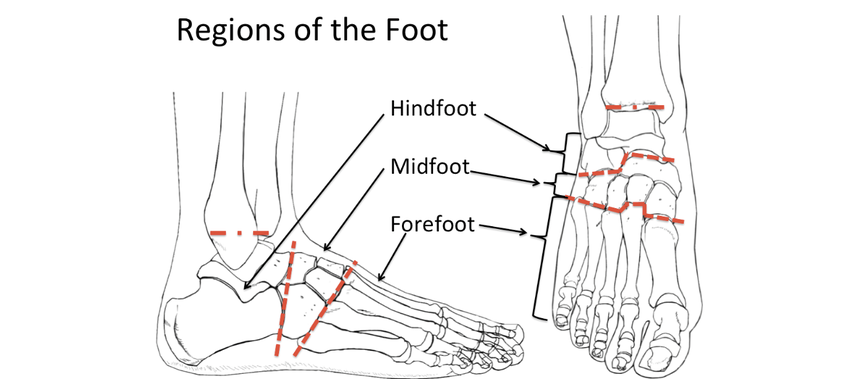
- The rearfoot is made up of the heel bone (calcaneus) and the talus, which sits on top of it and forms the ankle joint with the two shin bones (tibia and fibula). The joint between the talus and heel bone, the subtalar joint, lets the heel tilt inwards and outwards. This is what allows your foot to adapt to uneven ground.
- The midfoot is a cluster of five smaller bones (the navicular, cuboid and three cuneiforms) that form the arch. The key joint here, the midtarsal joint, can either loosen to absorb shock or lock to make the foot rigid.
- The forefoot includes the five long metatarsal bones and the 14 small bones of the toes. The big toe joint is particularly important, as it bends as we push off with every step.
The arches
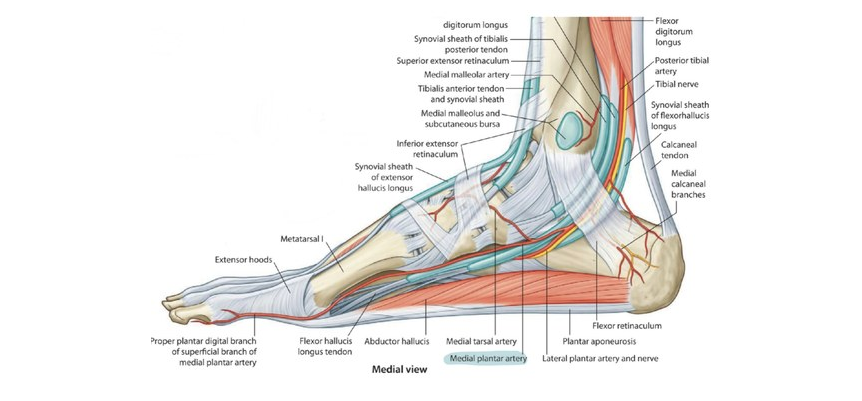
The foot has three arches: one along the inner edge (the one most people think of), a lower one along the outer edge, and one running across the foot. They are held up by the shape of the bones, by ligaments, by a thick band of tissue under the sole called the plantar fascia, and by muscles.
Those muscles come in two groups. The long muscles start in the lower leg and send tendons down into the foot; these control the big movements and help support the arch. The small muscles live entirely within the foot and act like a fine-tuning system, keeping the arch stable and the toes working.
What your foot does with every step
In a single step, your foot has two opposite jobs. First it must become soft and flexible to absorb the impact of landing and adapt to the ground. Then, a fraction of a second later, it must become a stiff lever to push you forwards. The clever part is how it switches between the two.
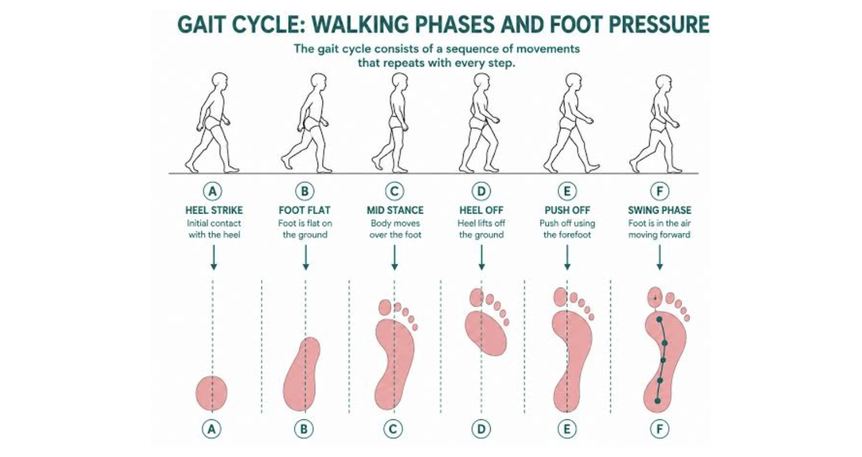
- Heel strike. The outer edge of the heel touches the ground first. The muscles at the front of the shin work to lower the foot gently, rather than letting it slap down.
- Loading and flat foot. The heel bone rolls slightly inwards (pronation). This “unlocks” the midfoot joints so the arch can flatten a little, spreading the load and soaking up shock. Some pronation is completely normal and healthy.
- Midstance. Your body passes over the foot. The calf muscles start to control how far the shin moves forwards over the ankle, and the foot begins to roll back outwards.
- Heel lift. The heel rolls outwards (supination), which “locks” the midfoot joints and turns the foot into a rigid lever. At the same time, the big toe starts to bend upwards, which pulls the plantar fascia tight like a winch and raises the arch. This is known as the windlass mechanism.
- Toe off. The calf and the long toe muscles drive you forwards, with most of the push coming through the big toe.
- Swing. The foot lifts clear of the ground and the muscles at the front of the shin hold the toes up so you don't trip, ready for the next heel strike.
When this sequence works well, the load is shared across many joints and tissues. When something changes, such as a stiff big toe, a weak calf, an old ankle sprain, or a new pair of shoes, one part of the chain often ends up working harder than it should. That is usually where pain appears.
Where it hurts, and what might be involved
Where you feel pain gives us useful clues about which tissues are under strain. Below are the most common areas we see in clinic. These are general patterns, not a diagnosis, and more than one tissue is often involved.
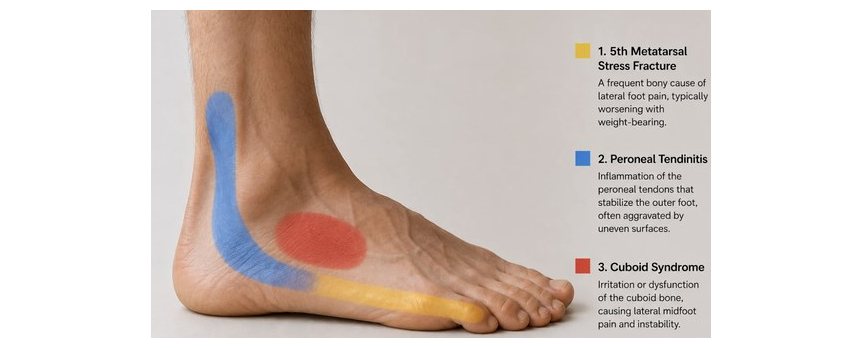
Outer edge of the foot
- Peroneal tendons. Two tendons run behind the bony bump on the outside of the ankle and along the outer edge of the foot. They steady the foot on uneven ground, and can become irritated after an ankle sprain or with shoes that tip the foot outwards.
- The base of the fifth metatarsal. The bony bump halfway along the outer edge, where one of these tendons attaches, can become sore with repeated strain.
- Cuboid. This midfoot bone can become stiff or painful, often after a rolled ankle.
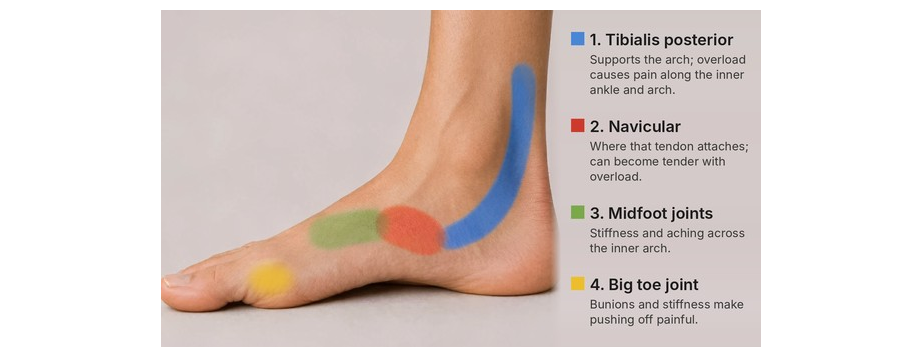
Inner edge of the foot
- Tibialis posterior tendon. This tendon runs behind the bony bump on the inside of the ankle and is one of the main supports of the arch. When it is overloaded, pain and swelling can develop along the inner ankle and arch, and the arch may feel like it is dropping.
- Bunions and the big toe joint. Pain at the base of the big toe can come from a bunion or from wear and stiffness in the joint (sometimes called hallux rigidus), which makes pushing off painful.
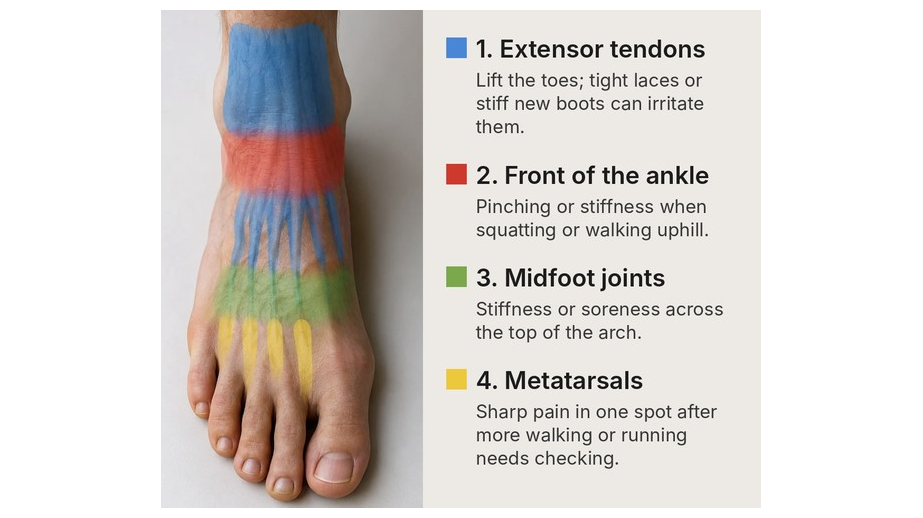
Top of the foot
- Extensor tendons. These tendons lift the toes and run across the top of the foot. Tight laces or stiff new boots pressing on them are a very common autumn culprit.
- Midfoot joints. Stiffness or irritation in the small joints across the top of the arch.
- Stress reactions in the metatarsals. A sudden increase in walking or running, especially in unfamiliar footwear, can overload these bones. Pain that is sharp, localised to one spot and worse with activity should always be checked.
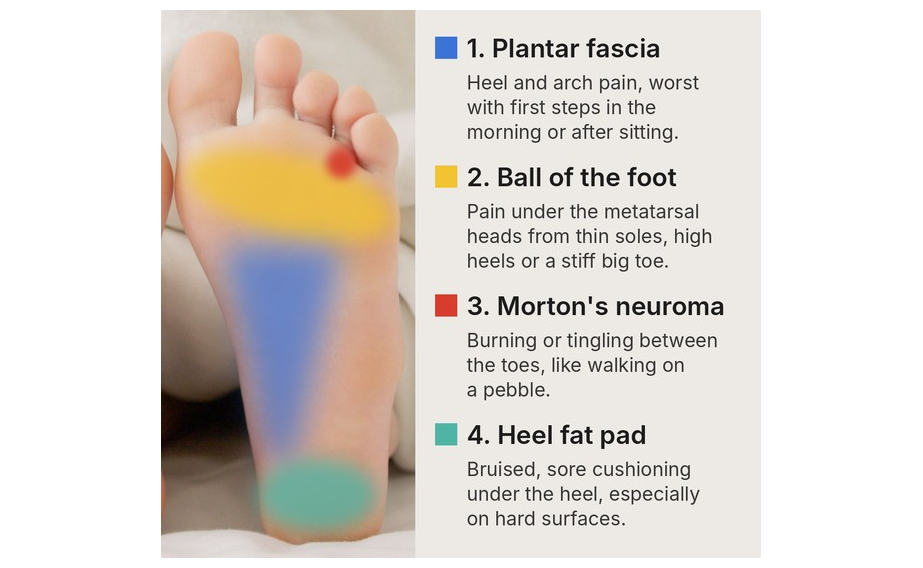
Sole of the foot
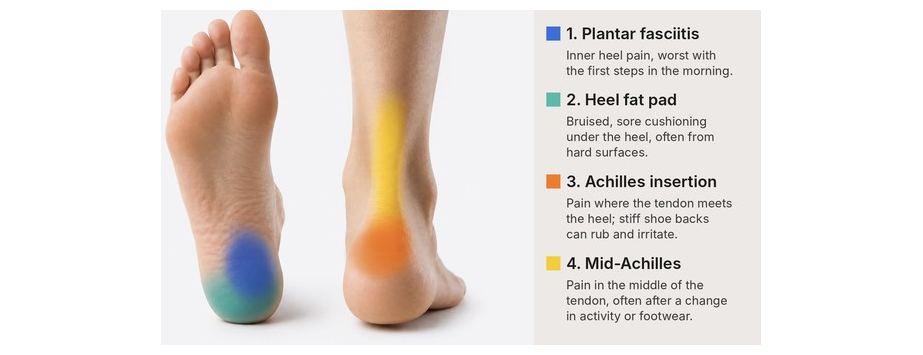
- Plantar fascia. The most common cause of heel and arch pain we see. It is typically worst with the first steps in the morning or after sitting, and eases as you get moving.
- The ball of the foot. Pain under the metatarsal heads (metatarsalgia) can come from thin soles, high heels or a stiff big toe shifting load onto the smaller toes.
- Morton's neuroma. An irritated nerve between the toes, usually the third and fourth, causing burning, tingling or a feeling like walking on a pebble. Narrow shoes often make it worse.
- Heel fat pad. The cushioning pad under the heel can become bruised and sore, particularly on hard surfaces.
Back of the heel
- Achilles tendon. The strongest tendon in the body, connecting the calf to the heel. Pain can sit in the middle of the tendon or where it attaches to the heel bone, and often follows a change in activity or footwear.
- Bursitis. Small fluid-filled cushions around the back of the heel can become inflamed, especially when a stiff shoe heel counter rubs.
- Haglund's deformity. A bony bump on the back of the heel that is aggravated by rigid shoe backs.
Ankle
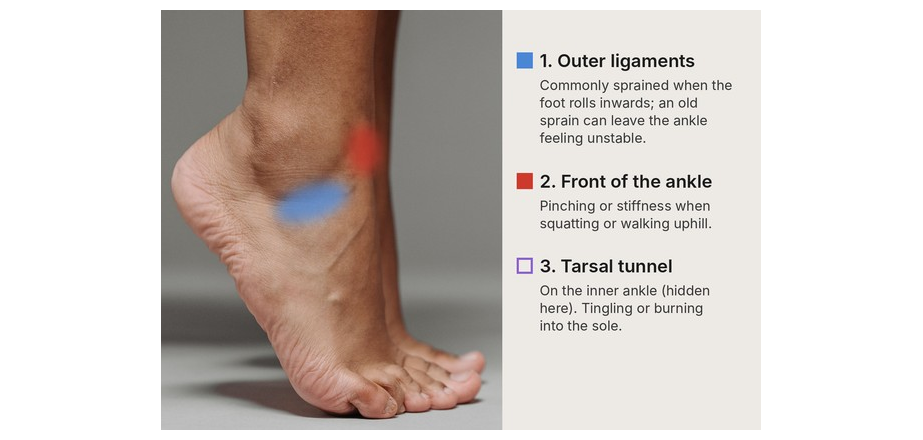
- Ligaments. The ligaments on the outside of the ankle are commonly sprained when the foot rolls inwards; slippery autumn leaves and wet pavements don't help. An old sprain that never fully recovered can leave the ankle feeling weak or unstable.
- Front of the ankle. Pain or pinching at the front of the ankle when squatting or walking uphill can come from stiffness or impingement in the joint.
- Tarsal tunnel. Nerve irritation on the inside of the ankle can cause tingling or burning into the sole.
What helps, and when to see us
Most autumn foot pain settles with a few sensible changes:
- Ease into new footwear. Wear new boots or shoes for short spells at first, and alternate with a pair your feet already know.
- Check the fit. Leave room for your toes to spread, and make sure laces aren't pressing hard across the top of the foot. A heel that rubs or digs in is worth swapping out.
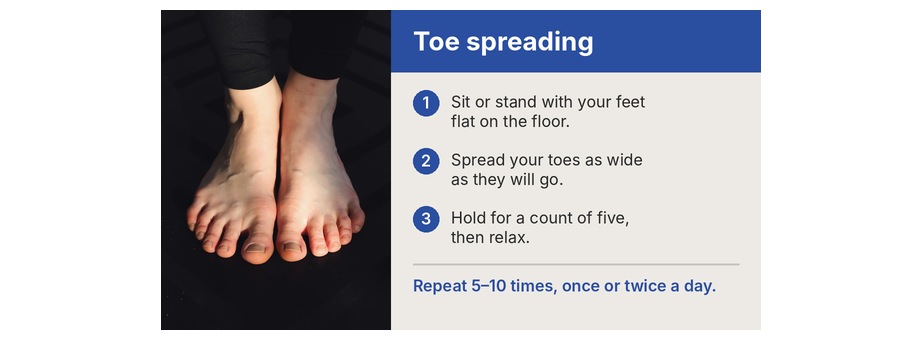
- Keep your feet moving. Simple exercises such as calf raises, toe spreading and rolling the sole over a ball help keep the foot strong and mobile.
- Build up gradually. If you are increasing your walking, running or sport, add a little at a time.
It's worth booking in if pain lasts more than a couple of weeks, is getting worse, stops you walking normally, or is sharp and focused on one spot. Please seek medical advice promptly if you have significant swelling or bruising after an injury, can't put weight on the foot, or have numbness, colour change or signs of infection.
At VPO, we'll look at the whole picture: your feet, ankles, knees, hips and the way you walk, as well as your footwear and activity. From there we'll decide what is appropriate, that may be building a plan that may include hands-on treatment, targeted exercises and advice to get you back on your feet comfortably. If needed, we can also refer for further investigation